GLP-1 Medication in a Nursing Home, Rehab Stay or Assisted Living: A Family Logistics Guide
When a parent or partner moves into short-term rehab, a nursing home or assisted living, their weekly GLP-1 pen moves from a kitchen fridge into somebody else’s system. Pharmacies change, storage changes, and the person who used to give the injection may no longer be allowed to. This guide covers the logistics families run into, using federal nursing home rules and Medicare’s own guidance. Whether the medication is continued, and at what dose, is a decision for the resident’s clinicians.
- ✓Bring an accurate medication list with the GLP-1 product, strength and injection day. Ask the nurse to confirm it was continued.
- ✓Certified nursing homes must keep drugs locked and at proper temperature (42 CFR 483.45(h)). You don’t need to bring a cooler.
- ✓Self-injection is allowed only if the interdisciplinary team decides it is clinically appropriate (42 CFR 483.10(c)(7)).
- ✓During a Part A–covered skilled nursing stay, Part A covers medications used in the facility; long-term residents usually use Part D through a long-term care pharmacy.
- ✓Ask before bringing pens from home. Many facilities supply medications through their own pharmacy.
- ✓Plan discharge early: who will have pens and needles ready on day one at home.
Three Settings, Three Sets of Rules
Families use “the facility” for very different places, and the medication rules change with the setting.
- Short-term rehab in a skilled nursing facility. Often follows a hospital stay. If it is a Medicare Part A–covered stay, Medicare pays for medications as part of the stay. Federal nursing home rules apply.
- Long-term nursing home care. The same federal rules apply in certified facilities, but drug coverage usually runs through the resident's Part D plan or other insurance, via a long-term care pharmacy.
- Assisted living. Regulated by each state, not by the federal nursing home rules. What staff may do with medication ranges from reminders to giving injections, depending on the state and the community's license. Medicare.gov notes that Medicare doesn't cover custodial care such as most assisted living costs; it does still cover Part D drugs for someone enrolled.
If you aren't sure which one you're dealing with, ask the admissions office directly: “Is this a Medicare-certified skilled nursing facility, and is this a Part A stay?” The answer changes almost everything below.
Admission Day: The Medication List Matters More Than the Pens
When someone arrives at a care facility, staff review every medication they've been taking. A weekly injection is easy to miss on that list because it isn't taken every day, and if the person came from a hospital, the hospital's discharge list may already differ from what they took at home. Bring a written list with:
- The exact product name (for example Ozempic, Wegovy, Mounjaro or Zepbound) and strength, as printed on the pharmacy label.
- The day of the week it is usually given and the date of the last dose.
- The prescriber's name and phone number, and the pharmacy that has been filling it.
- Any instructions the prescriber gave about stopping or restarting around a procedure, if the move follows surgery. Our guide to GLP-1 medications and surgery covers what to ask the surgical team.
Our medication list and emergency info card has a layout you can print and hand over. A day or two after admission, ask the nurse to confirm the GLP-1 is on the resident's medication administration record and which day it is scheduled. If it was deliberately held or stopped, that is a clinical decision, and the person to talk to is the facility physician or the resident's own prescriber.
Who Stores the Pens
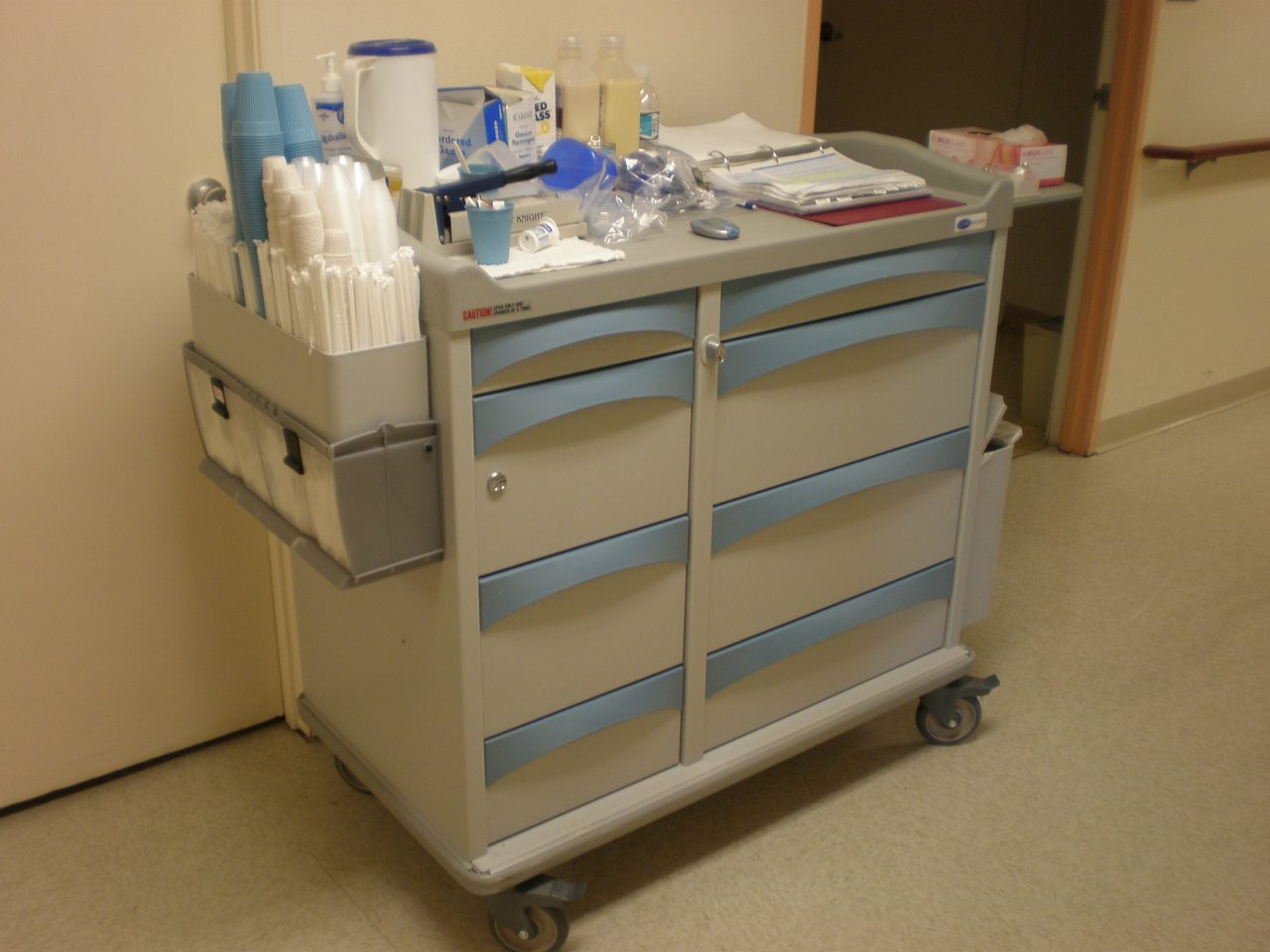
In a Medicare- or Medicaid-certified nursing home, federal regulation answers this one. Under 42 CFR 483.45(h), the facility must store all drugs and biologicals in locked compartments under proper temperature controls, and only authorized personnel may have the keys. In practice, refrigerated medications go into the facility's medication refrigerator, not a resident's room.
That is good news for a pen that needs refrigeration, but it helps to know what the pen's own label requires so you can ask sensible questions. Per current FDA-approved prescribing information, unused GLP-1 pens are generally stored refrigerated at 36–46°F (2–8°C) and must not be frozen. Once a pen is in use, the room-temperature allowance differs by product. Commonly cited figures include up to 56 days for Ozempic within 59–86°F, up to 28 days for Wegovy within 46–86°F, and up to 21 days for Zepbound at or below 86°F. Confirm the exact numbers on the package insert. Our storage guide explains the details.
Assisted living is different. Some communities keep all medication centrally; others let residents keep medication in their apartment, sometimes with a small refrigerator. If the pens will live in a resident's own fridge, a simple fridge thermometer is worth having. Our fridge thermometer guide compares a few.
Moving pens between home, hospital and a facility? An insulated medical case with a thermometer keeps the hand-off simple.
See Travel & Organization Gear →Who Gives the Injection
At home, a spouse or adult child may have been giving the weekly injection. In a nursing home, that usually stops. Facility nursing staff give medications according to the physician's orders, and facilities don't typically hand that job to visiting family.
Residents themselves sometimes can. Federal rules (42 CFR 483.10(c)(7)) give a nursing home resident the right to self-administer medications if the interdisciplinary team has determined it is clinically appropriate. CMS's surveyor guidance lists what the team should consider, including the resident's cognitive status, physical ability, understanding of the medication and its timing, and ability to store it safely and securely, and says the decision should be documented and reassessed as the resident's condition changes. Someone who has managed their own pen for months and is in for short-term rehab after a hip replacement may be a good candidate. Someone with new confusion after a hospital stay may not be, at least for now.
If self-injection matters to the resident, say so at the first care-plan meeting rather than waiting for a problem. In assisted living, ask the community what its license and its state's rules allow staff to do. Some can only remind; some can give injections; some require an outside home-health nurse.
Where the Medication Comes From
Nursing homes typically get residents' medications through a long-term care pharmacy that delivers to the facility. That has practical consequences:
- Your usual pharmacy may drop out of the picture. If a retail or mail-order pharmacy has auto-refills set up, pause or redirect them so pens don't keep arriving at an empty house. Our mail-order delivery guide covers what happens when a cold-chain package sits on a porch.
- Pens from home may not be used. Many facilities won't use medication brought from home, or will only after verifying and relabeling it. Ask before you bring anything, and never leave pens in a room without telling nursing staff.
- Prior authorization can resurface. If the long-term care pharmacy bills a different plan or needs a new prescription, an existing approval may not transfer cleanly. Our prior authorization guide explains the process.
How Medicare Pays in Each Setting
Coverage depends on the kind of stay, not on the building.
- Part A–covered skilled nursing stay. Medicare.gov says Part A covers medications as part of a covered SNF stay, and CMS tells facilities that Part D should not be billed for drugs covered under that stay. Whether a given drug is used during rehab is still up to the facility's prescriber.
- Long-term nursing home resident. Medicare's drug coverage guide says residents of a long-term care facility get Part D drugs through a long-term care pharmacy that works with their plan. Whether the specific GLP-1 is covered depends on the plan's formulary and the reason it is prescribed.
- Assisted living. Part D works much as it did at home. The resident's plan covers what it covers, filled at a pharmacy the plan accepts.
Coverage of GLP-1 drugs under Medicare is changing, and our Medicare GLP-1 guide tracks the current rules. Medicaid, which pays for many long-term nursing home residents, has its own state-by-state coverage; see Medicaid GLP-1 coverage.
Needles, Side Effects and Day-to-Day Questions
In a nursing home, used pen needles go into the facility's own sharps containers; you don't need to supply one. In assisted living, a resident who self-injects in their apartment will need a container and a disposal route. Our sharps disposal guide covers the options.
Families also notice things staff may not know to connect to a weekly injection. If a resident seems to eat less, or has stomach trouble on certain days of the week, tell the nurse which day the injection is scheduled and what you've noticed, and let the clinical team decide what it means. Our side effects overview explains the commonly reported effects listed on product labels, which helps you describe what you see without guessing.
Discharge: Don't Let the Pen Fall Through the Gap
The riskiest day for a weekly medication is often the day someone goes home. The facility's supply may stay with the facility, and a home pharmacy can need days to fill a refrigerated prescription. Before discharge:
- Ask whether the GLP-1 is on the discharge medication list, at what strength, and which day the next dose is due.
- Find out whether a new prescription has been sent, and to which pharmacy.
- Call that pharmacy to check stock and timing. Our pharmacy pickup guide covers picking up a refrigerated prescription.
- Make sure pen needles and a sharps container are at home.
- Decide who will give the injection at home now, especially if that has changed since admission.
Questions to Ask the Facility
- Is this a Medicare-certified skilled nursing facility, and is this a Part A stay?
- Has the GLP-1 been continued, and which day of the week is it scheduled?
- Which pharmacy supplies medications here, and should we stop our home refills?
- Can we bring pens from home, and if so, what do you need to do with them?
- Can the resident self-inject, and how is that decided and stored?
- Who do we call with questions about the medication: the unit nurse, the facility physician or the resident's prescriber?
For more on supporting someone through this, see our caregiver guide and the questions to ask your doctor.
This guide covers logistics only. It is not medical advice. Whether a GLP-1 medication is continued, held or changed in a care facility is a decision for the resident's clinicians; talk to them and the facility's pharmacist about your situation.
Frequently Asked Questions
Can my parent keep taking their GLP-1 medication in a nursing home?
That is a decision for the facility’s physician or the resident’s prescriber, who will review the full medication list at admission. Facilities often reconcile medications when someone arrives, so do not assume the order carries over unchanged. Bring an accurate list that includes the GLP-1 product, its strength and the day of the week it is given, and ask the admitting nurse directly whether it has been continued.
Can a nursing home resident give their own injection?
Sometimes. Federal rules for Medicare- and Medicaid-certified nursing homes (42 CFR 483.10(c)(7)) give residents the right to self-administer medications if the interdisciplinary care team has determined it is clinically appropriate. CMS guidance says the team should consider things like the resident’s cognition, physical ability, understanding of the medication and ability to store it safely, and should reassess as the resident’s condition changes.
Who keeps the pens refrigerated in a nursing home?
The facility. Federal rules (42 CFR 483.45(h)) require certified nursing homes to store drugs and biologicals in locked compartments under proper temperature controls, with access limited to authorized staff. Ask where the pens will be kept, and if the resident self-administers, how the facility will store their supply safely in line with the care plan.
Does Medicare pay for a GLP-1 during a skilled nursing facility stay?
During a Medicare Part A–covered skilled nursing facility stay, Medicare.gov says Part A covers medications as part of the stay, and CMS says Part D should not be billed for those drugs. Whether a particular drug is used is still a clinical decision by the facility’s prescriber. For long-term residents who are not in a Part A stay, Medicare drug coverage generally runs through Part D using a long-term care pharmacy that works with the resident’s plan.
Can we bring pens from home to a rehab or nursing facility?
Policies differ. Many nursing homes get medications through a contracted long-term care pharmacy and may not use supplies brought from home, or may need to verify and relabel them. Ask the facility before you bring anything, and do not leave pens in a room or drawer without telling the nursing staff.
Is assisted living different from a nursing home for medications?
Yes. Assisted living is regulated by states rather than the federal nursing home rules, and what staff may do with medications, from reminders to giving injections, varies by state and by community. Ask the community what level of medication help it provides, who can give an injection, and where refrigerated medication is kept.
Sources
- eCFR — 42 CFR 483.45, Pharmacy services (storage of drugs and biologicals)
- eCFR — 42 CFR 483.10, Resident rights (self-administration of medications)
- CMS — State Operations Manual, Appendix PP (guidance to surveyors for long-term care facilities)
- Medicare.gov — Skilled nursing facility care coverage
- CMS MLN — Skilled Nursing Facilities: Identify & Prevent Improper Part D Payments for Drugs
- Medicare.gov — Your Guide to Medicare Drug Coverage
- Medicare.gov — Long-term care coverage
- DailyMed — Ozempic (semaglutide) prescribing information
- DailyMed — Wegovy (semaglutide) prescribing information
- DailyMed — Zepbound (tirzepatide) prescribing information