Best Fridge Thermometers for Storing GLP-1 Pens (2026): Min/Max Alarm, Bluetooth and Data-Logger Options Compared
Your pens spend most of their life in a refrigerator. Most of us assume that fridge is at 36–46°F (2–8°C) because the dial is set to the middle. A small thermometer is how you find out. This guide compares three types (a min/max alarm thermometer, a Bluetooth sensor and a USB data logger) on what they record, how accurate the maker says they are, how they alert you and where they fall short. It covers storage logistics only. What your pen needs is set by its label and your pharmacist.
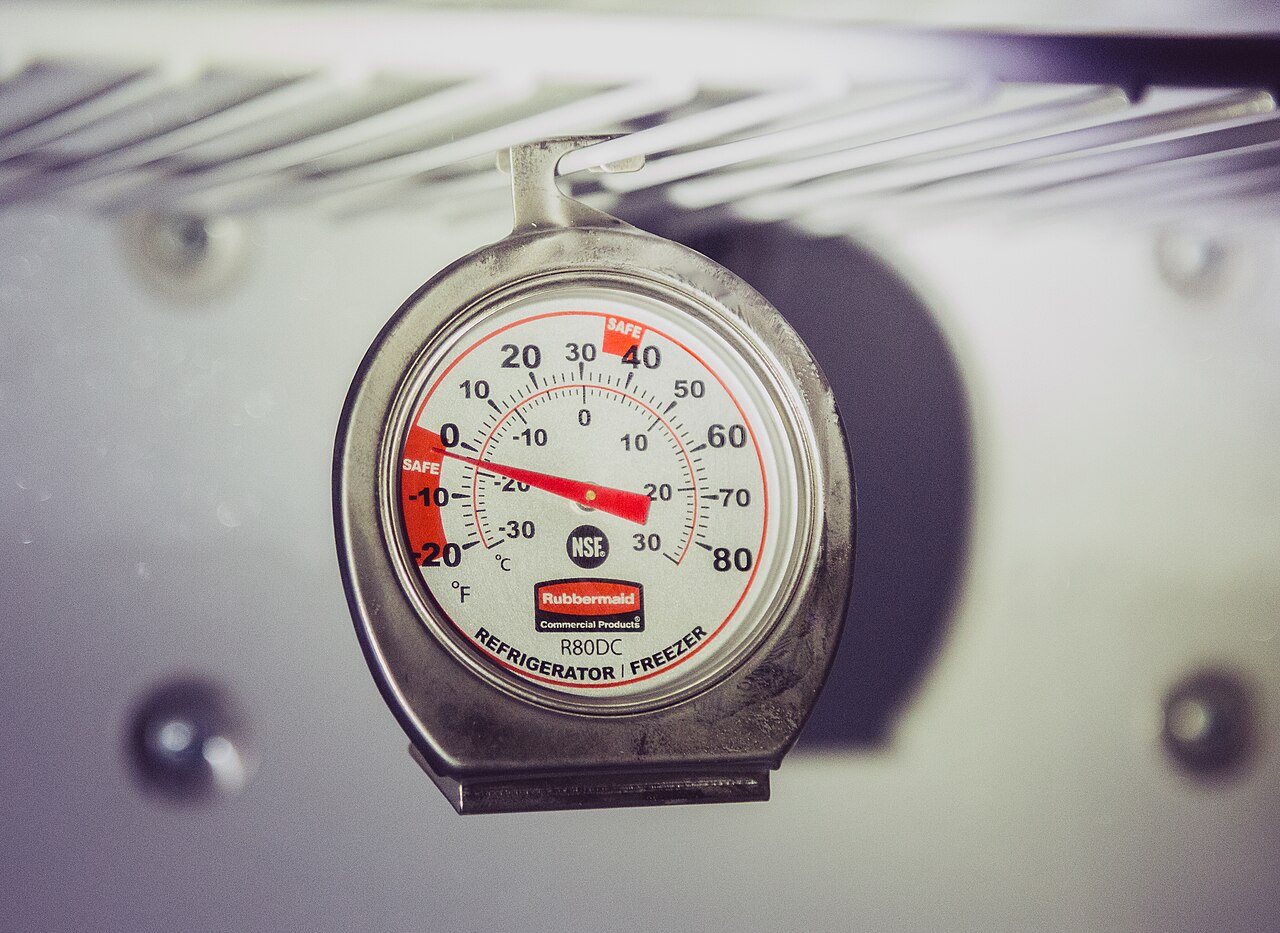
- ✓Most GLP-1 labels say to refrigerate unused pens at 36–46°F (2–8°C) and never freeze them. The dial in your fridge is a setting, not a reading.
- ✓Freezing is the quiet risk: the back wall and the area near the cooling vent can run colder than the middle shelf, while the door shelf runs warmer.
- ✓Min/max memory matters more than a live reading. It tells you what happened while you were asleep or away.
- ✓A probe in a glycol buffer reads more like the product than the air, so door-opening spikes don’t trigger false alarms. CDC recommends buffered probes for vaccine storage.
- ✓Bluetooth sensors only alert you while your phone is in range, and a fridge’s walls cut into that range.
- ✓If a reading was out of range, note the high, the low and how long it lasted, then ask your pharmacist before using the pen.
Disclosure: No company paid to be on this page, and the product links here are not affiliate links. Our separate gear page uses Amazon affiliate links and we may earn a commission if you buy through it. Every product fact below comes from the maker's own product page or spec sheet, checked October 30, 2026. We didn't test these devices, and we haven't invented ratings or reviews. Prices change often, so we don't list them.
How We Compared Fridge Thermometers
The best checklist we found for monitoring a medication fridge comes from the CDC's Vaccine Storage and Handling Toolkit. It is written for clinics, not households, and nothing in it is a legal requirement for storing your own prescription at home. But the features it asks of a temperature monitor answer the same question you have: did this fridge stay in range? CDC recommends a digital data logger with a buffered, detachable probe, an out-of-range alarm, a low-battery indicator, a display of the current, minimum and maximum temperatures, an uncertainty of ±0.5°C (±1°F), and a logging interval you can set. For each device, we recorded:
- Type and sensor. A wired probe you can place among the pens (and buffer), or a sensor built into the case.
- What it shows or records. A live reading only, min/max memory, an app history, or a full data log.
- Stated accuracy. As the maker publishes it, including the temperature band it applies to.
- Alerts. A beep or light at the fridge, a phone notification, or a mark in the record.
- Power. Battery type and, where stated, battery life.
- What can go wrong. Range limits, missing specs, or features that only work under certain conditions.
We left out the MedAngel ONE, a Bluetooth sensor built specifically for medication, because its maker's website was not reachable when we checked on October 30, 2026, so we couldn't confirm current specs or support from the source.
Fridge Thermometers for Medication Storage Compared
| Device | Type | Shows / records | Stated accuracy | Alerts | Power | Watch out for |
|---|---|---|---|---|---|---|
| Fridge/Freezer Thermometer (RT8100) ThermoWorks | Two-channel digital alarm thermometer with two wired probes (about 3 ft of cable each, suction-cup holders) | Live reading for each probe, plus min/max for the monitoring cycle | Not stated on the product page (check the manual) | Audible or LED alarm at user-set high/low limits (settable from −40°F to 158°F); counts elapsed time once in alarm for 30 minutes; caution symbol stays if temperature recovers | 2 AAA batteries | No phone alerts and no exportable history; the display sits outside the fridge, so you have to look at it |
| TempAir ELITE TP357 TempPro (formerly ThermoPro) | Bluetooth 5.0 thermometer-hygrometer with its own small display; internal NTC sensor (no probe) | Live reading on the unit and in the app, with 1 year of history in the app | ±1.0°F (±0.5°C) from 32 to 140°F; rated range −4 to 140°F | Phone notifications when temperature leaves the range you set in the TempPro app | 1 AAA battery | Marketed for rooms, not fridges; Bluetooth range (260 ft) is rated in open space, and a fridge’s walls are an obstruction |
| RC-5+ USB Temperature Data Logger Elitech | Reusable USB data logger with small display; internal sensor | Records readings at a set interval and builds a PDF report automatically when plugged into a computer’s USB port | ±0.5°C from −20 to +40°C (±1°C elsewhere), range −30 to +70°C, per Elitech’s RC-5 spec | High/low alarm icons on its display; the PDF report lists out-of-range events and their duration. No phone alerts | Replaceable CR2032 coin cell; Elitech says over a year at a 15-minute interval | You only see the full history after you plug it in; ships with a factory calibration certificate, ISO 17025 lab certificate optional |
Not a ranking. Listed in the order we discuss them. Figures are what each maker published on October 30, 2026.
ThermoWorks RT8100: Min/Max and an Alarm You Can See From the Kitchen
The RT8100 is a two-channel fridge/freezer alarm thermometer. ThermoWorks designed it with one probe for the freezer and one for the fridge. For pen storage, you can put both in the fridge instead, one on the shelf where the pens live and one near the back wall, to see whether part of the fridge runs cold enough to freeze. Each probe comes on about three feet of thin cable with a suction-cup holder, so the cable runs out through the closed door to a display on the outside. The display takes two AAA batteries and has a fold-out stand and magnetic clips.
The useful part is what it does when you are not looking. You set a high and a low limit for each channel (anywhere from −40°F to 158°F, per ThermoWorks), and it alarms with a beep or an LED when a probe goes outside them. After 30 minutes in alarm, a counter shows how long the problem has been going on. If the temperature comes back into range while you are away, a caution symbol stays on the display so you know something happened. Min/max memory shows the highest and lowest temperatures reached during the monitoring cycle. ThermoWorks lists pharmaceutical and medical storage among its uses. Its product page doesn't state an accuracy figure, so check the manual if that matters to you.
Best for: a home fridge where you want an at-a-glance answer every morning, without an app.
TempPro TP357: Phone Alerts, With a Range Caveat
The TP357 is a small Bluetooth thermometer and humidity sensor, sold under the TempPro brand (formerly ThermoPro). TempPro rates it at −4 to 140°F, with an accuracy of ±1.0°F (±0.5°C) between 32 and 140°F. That band covers a fridge's 36–46°F range. It refreshes every 10 seconds, runs on one AAA battery, and sends a notification to your phone through the TempPro app when the temperature leaves a range you set. The app keeps a year of history and doesn't require you to register an account.
Two caveats. First, TempPro markets the TP357 for rooms like bedrooms, offices and cellars, not refrigerators, and it doesn't say how its battery or radio behave inside a fridge. Second, its 260-foot Bluetooth range is rated in open space without obstructions, and TempPro notes that obstructions reduce it. A refrigerator's insulated walls are an obstruction, so try it at home before you rely on it: put it in the fridge, close the door and check that your phone still updates from where you usually are. Alerts only reach you while your phone is in range, so it won't warn you about a power cut while you are at work. Its sensor is inside the case, so it measures the air around it rather than a buffered probe.
Best for: people who want a phone notification at home and are willing to test the range first.
Elitech RC-5+: A Record You Can Hand to a Pharmacist
The RC-5+ is a reusable USB data logger about the size of a thumb drive. Elitech lists its RC-5 logger at −30 to +70°C with 0.1°C resolution and an accuracy of ±0.5°C from −20 to +40°C (±1°C outside that band). It stores up to 32,000 readings at an interval you set anywhere from 10 seconds to 24 hours. It is rated IP67 and runs on a replaceable CR2032 coin cell, which Elitech says lasts more than a year at a 15-minute interval. The “+” version creates a PDF report automatically when you plug it into a computer's USB port, so you don't need special software just to read it. Elitech says its loggers ship with a factory calibration certificate, and it sells versions with a certificate from an ISO 17025 lab. Elitech's RC-5+ manual says the report lists the alarm limits, the number and total duration of out-of-range events, and a color-coded graph.
A logger answers questions the other two can't: not just whether the fridge went out of range, but when, for how long and how far. That is the information a pharmacist or manufacturer support line will ask for if you call about an excursion. The trade-off is that you only see the full history when you plug it in, and it won't send you a live alert.
Best for: anyone who has had a fridge problem before, has an older or unreliable fridge, or stores a costly supply and wants proof of what happened.
The Accessory That Makes Any Probe More Useful: A Glycol Buffer
A bare probe measures air, and the air in a fridge jumps every time you open the door. Your pens don't change temperature that fast. A probe sitting in a small bottle of glycol responds more like the product does, so a 30-second door opening doesn't look like an emergency. CDC recommends buffered probes (glycol, glass beads, sand or Teflon) for vaccine storage because they best reflect the vaccine's temperature. ThermoWorks sells a glycol thermal buffer bottle for use with its probes. It says glycol buffers help minimize false alarms. This only works with a probe-style device like the RT8100, not with sensors built into the case.
Where to Put the Thermometer
- Where the pens sit. Put the probe or sensor on the same shelf, in the middle of the fridge. CDC tells clinics to place probes centrally because readings near the walls, floor, vents, ceiling or door can be colder or warmer than the product.
- Not in the door. The door shelf warms every time it opens, and it's the wrong place for pens anyway.
- Check the cold spots once. A second probe near the back wall or the cooling vent shows whether part of the fridge can freeze. Keep pens away from that area.
- Let it settle. After you move a thermometer or change the fridge setting, give the reading time to settle before you act on it.
- Read it on a routine. CDC asks clinics to check and record min/max at the start of each workday. At home, once each morning is a reasonable habit. Reset the min/max after you write it down.
What to Do If the Reading Is Out of Range
The thermometer only tells you what happened. Your label decides what it means. The labels for injectable GLP-1 pens generally say to refrigerate unused pens at 36–46°F (2–8°C) and not to freeze them. For example, an in-use Ozempic pen may be kept at 59–86°F or refrigerated for up to 56 days; Wegovy pens may be kept at 46–86°F for up to 28 days; and Zepbound single-dose pens may be kept unrefrigerated up to 86°F for up to 21 days total. Other products and forms differ, and our storage guide lists the details with links to each label. If a pen froze, got too hot, or you aren't sure, write down the high and low readings and how long they lasted, then ask your pharmacist before using it. Don't use a pen that has been frozen, even if it thawed.
A power cut is an obvious way for a home fridge to go out of range. Keep the door closed, check the min/max when power comes back, and see the outage section of the storage guide. If you're away from home, our hotel and vacation rental fridge guide explains why a minibar may not be a true refrigerator. A small thermometer is the easiest way to check.
Which One Fits You
- You want a simple daily check: ThermoWorks RT8100, with a glycol buffer bottle on the probe at the pens' shelf.
- You want a phone alert at home: TempPro TP357, after testing that your phone still sees it with the fridge door closed.
- You want proof of what happened: Elitech RC-5+, set to a 15-minute interval and checked weekly.
- You travel: a small sensor or logger in the hotel fridge or the cooler tells you whether it's really cold. See our powered travel cooler comparison.
For bags, cases and other storage accessories, see our GLP-1 gear page.
Sources
- ThermoWorks — Fridge/Freezer Thermometer (RT8100)
- ThermoWorks — Glycol Thermal Buffer Bottle
- TempPro — TempAir ELITE TP357 Bluetooth thermometer
- Elitech — RC-5+ USB temperature data logger with auto PDF report
- Elitech — RC-5 USB temperature data logger specifications
- Elitech — RC-5+ PDF temperature data logger manual (via ManualsLib)
- CDC — Vaccine Storage and Handling Toolkit (temperature monitoring devices)
- FDA — Ozempic prescribing information
- FDA — Wegovy prescribing information
- Lilly — Zepbound single-dose pen Instructions for Use