Best Non-Powered Cooling Cases for GLP-1 Pens (2026): FRIO, 4AllFamily Chiller, Nomad and Rambler, Medicool and VIVI Cap Compared
Most days with a GLP-1 pen don't need a cooler that plugs in. A work trip, a beach day or a flight usually needs something that keeps one or two pens out of the heat for a day or two, with no battery to charge. Non-powered cases do that in three different ways, and they don't all keep pens at fridge temperature. This guide compares six on how they cool, the temperature range and hold time each maker publishes, and which pens fit. It covers storage logistics only. What your pen needs is set by its label and your pharmacist.
- ✓Water-activated pouches (FRIO, 4AllFamily Chiller) keep contents at roughly 64–79°F, not fridge temperature. Both makers say so.
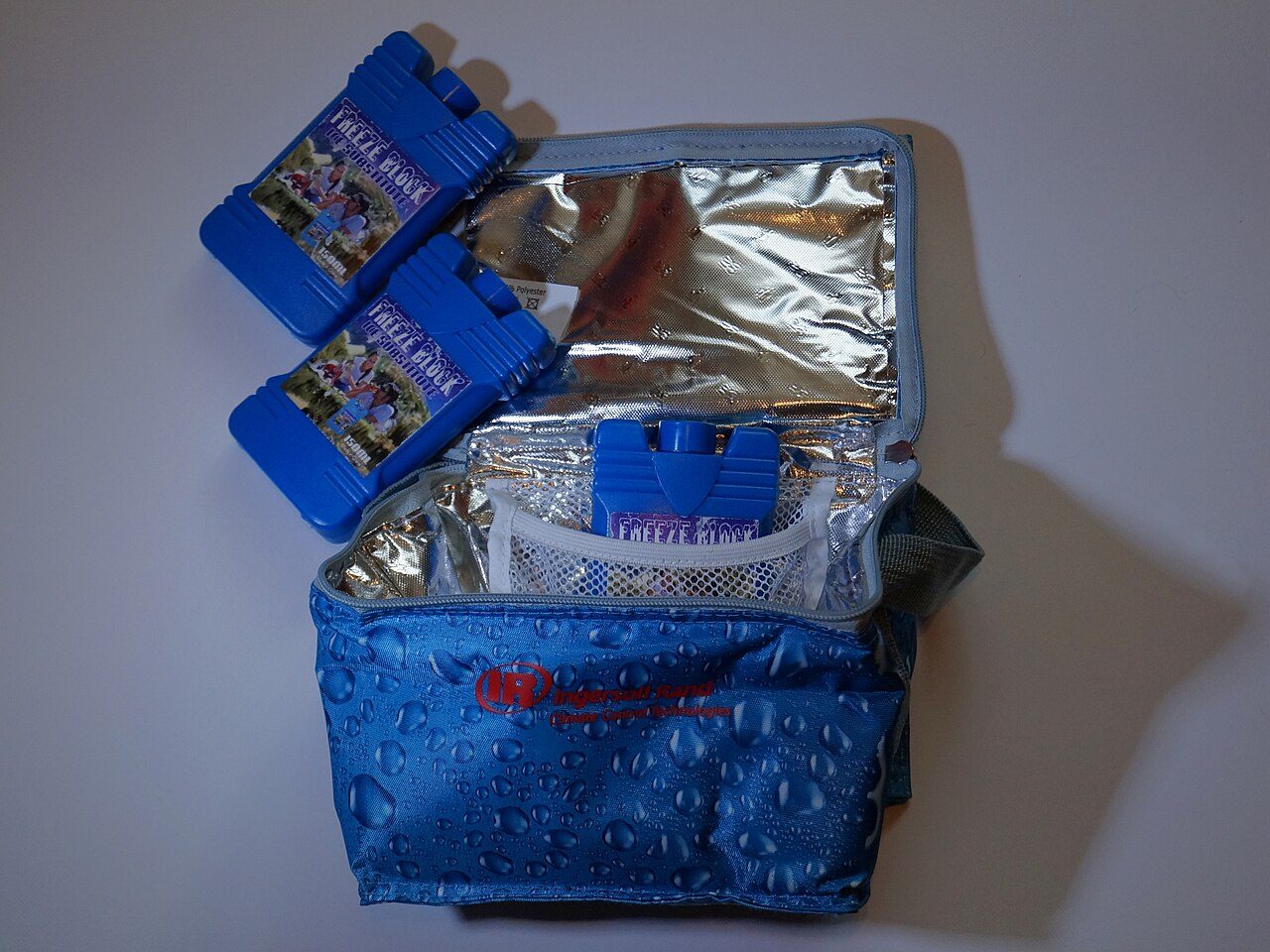
- ✓Freeze-pack cases can hold 36–46°F for a day or more by the maker’s figures, but a frozen pack can freeze a pen it touches.
- ✓Several GLP-1 labels allow pens up to 86°F for a set number of days, which is why a room-temperature pouch can still be useful.
- ✓Single-dose autoinjectors (Zepbound, Mounjaro single-dose, US Wegovy) take more room: 4AllFamily fits 1 in its Medium Nomad and 3 in the Large.
- ✓VIVI Cap replaces the cap on multi-dose pens; the maker lists Ozempic, Saxenda and Victoza, not US single-dose pens.
- ✓TSA doesn’t approve products, but it allows medically necessary freezer packs in carry-ons after screening.
Disclosure: No company paid to be on this page, and the product links here are not affiliate links. Our separate gear page uses Amazon affiliate links and we may earn a commission if you buy through it. Every product fact below comes from the maker's own product page, checked November 17, 2026. We didn't test these cases and haven't invented ratings or reviews. Prices change often, so we don't list them.
How We Compared Non-Powered Cases
We looked for cases sold for carrying insulin or GLP-1 pens that need no outlet, USB port or battery, and that say on the maker's own page how they cool and which pens fit. For each one we recorded:
- Cooling method. Evaporative crystals activated with water, a freeze pack, or insulation only.
- Temperature range. Fridge range (36–46°F, 2–8°C), a room-temperature ceiling, or no published range.
- Hold time. As the maker states it, including the outside temperature it was rated at.
- GLP-1 pen fit. From the maker's own compatibility list, because single-dose autoinjectors are much bulkier than multi-dose pens.
- What can go wrong. Mistaking a room-temperature pouch for a fridge, or freezing a pen against a pack.
If you need fridge temperature for several days, a powered option fits better; see our powered travel cooler comparison.
Non-Powered GLP-1 Pen Cases Compared
| Case | How it cools | Temperature range | Hold time (maker's figures) | GLP-1 pen fit | Watch out for |
|---|---|---|---|---|---|
| FRIO wallets (Classic, VIVA, Extra Large) FRIO | Water-activated evaporative crystals; soak 10–15 minutes, re-soak to reactivate | 18–26°C (64.4–78.8°F); not fridge temperature | At least 45 hours at a constant 100°F (37.8°C) outside, per FRIO; product pages say 2–4 days of cooling | Sized by insulin pens: e.g. VIVA Large holds 4 pens, Extra Large 8 pens; FRIO says it suits in-use insulin and GLP-1s | Needs air around it to evaporate; won’t hold 36–46°F |
| Chiller cooling pouch 4AllFamily | Water-activated evaporative crystals; soak 20–30 minutes, reactivate every 45 hours | 64.4–79°F (18–26°C); maker says “cool, not refrigerated” | At least 45 hours at outside temperatures up to 100°F (37.8°C), per 4AllFamily | Insulin pens, EpiPens and similar; 4AllFamily labels it “Not for Refrigerated Medications” | Same as FRIO: a room-temperature tool, not a fridge |
| Nomad cooling case (Medium, Big) 4AllFamily | Insulated case with a frozen Biogel freeze pack | 36–46°F (2–8°C), then below 79°F (26°C) | Big at 86°F: 33 h at 2–8°C, 52 h below 26°C; at 104°F: 28 h and 46 h. Medium at 86°F: 30 h and 48 h; at 104°F: 26 h and 44 h | Medium: 2 Ozempic or Wegovy, 1 Mounjaro or Zepbound. Large: 5 Ozempic or Wegovy, 3 Mounjaro or Zepbound (maker list) | Freeze pack must be fully frozen; keep pens from freezing against it |
| Rambler 12H single-pen case 4AllFamily | Small insulated tube with a frozen Biogel pack | 36–79°F (2–26°C); maker says not for refrigerated medications | Up to 12 h at 104°F, 14 h at 95°F, 16 h at 86°F outside | 1 pen; maker lists Victoza and Mounjaro KwikPen among GLP-1s | One pen only; check your pen against the maker’s list |
| GLP-1 Large Medicine Cooling Organizer Medicool | Zippered insulated organizer with an extra-large refreezable gel pack | Not stated on the product page | “Up to *30 hours” (asterisked; conditions not stated on the page) | Maker says it fits major GLP-1 pens incl. Ozempic, Mounjaro, Wegovy, Trulicity, Victoza; 10.5 × 7.5 × 3 in; 1-year warranty | No published temperature range; pair with a thermometer |
| VIVI Cap TempraMed | Insulated replacement pen cap with a built-in temperature indicator; no water, ice or charging | No numeric hold range on the page we read | No hold time published; maker says it works every day for years with no maintenance | Maker lists Ozempic, Saxenda and Victoza among GLP-1s; Wegovy only as the multi-use pen sold outside the US | A cap for one multi-dose pen, not a case for single-dose autoinjectors |
Not a ranking. Listed in the order we discuss them. Figures are what each maker published on November 17, 2026.
Fridge Temperature or Room Temperature? Check Your Label First
The labels set the rules, and they differ by drug. Per the FDA prescribing information and Lilly's instructions for use, Ozempic pens in use may be kept at 59–86°F or refrigerated for up to 56 days, Wegovy pens may be kept at 46–86°F for up to 28 days, and Zepbound single-dose pens may be kept unrefrigerated up to 86°F for up to 21 days total. Unused pens are otherwise stored in the refrigerator at 36–46°F, and none should be frozen.
That split explains why two very different products both get called GLP-1 cooling cases. A freeze-pack case tries to keep pens at fridge temperature for a limited time. An evaporative pouch keeps pens below about 79°F, which is inside the room-temperature ceiling on these labels but well above the fridge range. Neither one resets the label's day count. If you aren't sure which window your pen is in, ask your pharmacist before you travel.
FRIO: The Original Water-Activated Wallet
FRIO wallets use crystals sealed in fabric panels. You soak the inner wallet in water for 10 to 15 minutes, the crystals swell into a gel, and evaporation keeps the inside cooler than the air around it. FRIO says the wallets keep in-use insulin, GLP-1s and other temperature-sensitive medications at 18–26°C (64.4–78.8°F) for at least 45 hours even at a constant 100°F (37.8°C), and its product pages say a soak cools for 2 to 4 days before you re-soak it. There's no ice, so nothing in the wallet can freeze a pen.
FRIO sizes its wallets by insulin pens: the VIVA Large zipper wallet holds four pens and the Extra Large holds eight, with inner dimensions listed on each product page. Insulin pens and multi-dose GLP-1 pens are similar in size; single-dose autoinjectors are thicker, so compare dimensions before ordering. Because it works by evaporation, a FRIO needs some air around it. Sealed in a plastic bag or buried in a packed suitcase, it won't cool as well.
4AllFamily Chiller: Same Idea, Clearly Labeled
The Chiller is 4AllFamily's water-activated pouch. You soak it for 20 to 30 minutes to activate the crystals. 4AllFamily says it keeps contents at 64.4–79°F (18–26°C) for at least 45 hours at outside temperatures as high as 100°F, and tells you to reactivate it every 45 hours or when the gel starts to shrink back into crystals. The product page is unusually direct: its headline says it keeps medications cool below 79°F and is "Not for Refrigerated Medications." That's the right way to think about both evaporative products on this page.
4AllFamily Nomad: The Non-Powered Case With a Fridge-Range Rating
The Nomad is an insulated case with a Biogel freeze pack, and it's the only product here that publishes how long it holds the fridge range. 4AllFamily rates the Big Nomad at 33 hours at 2–8°C and 52 hours below 26°C when it's 86°F outside, dropping to 28 and 46 hours at 104°F. The Medium is rated at 30 and 48 hours at 86°F, and 26 and 44 hours at 104°F. After the fridge-range window, the case keeps going as a room-temperature cooler.
The maker's fit list is specific: the Medium takes up to two Ozempic or Wegovy pens or one Mounjaro or Zepbound pen, and the Large up to five Ozempic or Wegovy pens or three Mounjaro or Zepbound pens. Check your exact pen against that list before buying. The freeze pack has to be fully frozen to hit those numbers, so plan a night in a freezer before you leave.
4AllFamily Rambler 12H: One Pen, One Day
The Rambler is a small single-pen case with its own Biogel pack. 4AllFamily rates it at 36–79°F (2–26°C) for up to 12 hours at 104°F outside, 14 hours at 95°F and 16 hours at 86°F, and labels it for open medications kept below 79°F, not for refrigerated medications. Among GLP-1s, the maker lists Victoza and the Mounjaro KwikPen as fitting. It's the lightest option here for carrying the one pen you're using on a long day out. 4AllFamily also promotes a newer Rambler Pro, which we didn't cover here.
Medicool GLP-1 Large Medicine Cooling Organizer
Medicool, a long-standing maker of diabetic travel cases, sells a GLP-1-specific zippered organizer measuring 10.5 by 7.5 by 3 inches. It has two large pockets and one small one for pens, pen needles and alcohol swabs, a shoulder strap and handle, and an extra-large refreezable gel pack. Medicool says it fits all major GLP-1 pens, naming Ozempic, Mounjaro, Wegovy, Trulicity and Victoza, and carries a one-year warranty.
The gap is temperature data. The product page says the gel pack keeps medications cool "for up to *30 hours," but the asterisked conditions and the temperature range aren't stated on the page we read. It suits someone who wants pens and supplies organized in one bag; drop in a small min/max thermometer if you need to know the range. Medicool's older Dia-Pak case is listed on our gear page.
TempraMed VIVI Cap: Insulation on the Pen Itself
VIVI Cap takes a different approach. It replaces the cap on a multi-dose pen with an insulated cap that stays on the pen, so there's no water, ice or charging. TempraMed says it needs no water, ice packs, refrigeration or battery charging, works every day for years, and has a built-in temperature sensor with an easy-to-read indicator. It weighs about 60 grams. Among GLP-1 medications, TempraMed lists Ozempic, Saxenda and Victoza; its list names Wegovy only as the multi-use pen sold outside the US. US Wegovy, Zepbound and Mounjaro single-dose pens are autoinjectors without that kind of cap, so VIVI Cap isn't for them. We didn't find a numeric temperature range or hold time on the page we read, so we can't compare it on those terms.
Which Case Fits Your Situation
- A flight or a day trip with an unopened pen that must stay cold: a freeze-pack case with a published 2–8°C rating, such as the Nomad, with the pack fully frozen and a barrier between pack and pen.
- A summer week with a pen already in its room-temperature window: a water-activated pouch (FRIO or Chiller). No ice, nothing to freeze, reactivate every couple of days.
- One pen in a bag every day: Rambler 12H if your pen is on 4AllFamily's list, or VIVI Cap on a multi-dose pen like Ozempic.
- Pens plus needles and swabs in one place: Medicool's GLP-1 organizer, ideally with a thermometer inside.
- Several days at fridge temperature with no reliable fridge: a powered cooler. See our powered cooler comparison.
What Official Guidance Says
The FDA-approved labels are the authority on temperature: refrigerate unused pens at 36–46°F, don't freeze them, don't use a pen that has been frozen, and observe the drug-specific room-temperature limit and day count. For screening at the airport, TSA says medically necessary liquids, freezer packs and cooling accessories are allowed in carry-on bags and are screened; tell the officer before screening begins. No case on this page changes what your label says.
Questions to Ask Your Pharmacist
- Is my current pen in its refrigerated period or its room-temperature window, and how many days are left?
- Is a room-temperature cooling pouch enough for my pen on this trip, or does it need to stay at 36–46°F?
- If my pen got warmer than 86°F or touched a frozen pack, how should I decide whether to use it?
- Should I carry a spare pen or a written prescription when I travel?
FAQ
What is the best cooling case for a GLP-1 pen without a battery?
It depends on what the pen needs. If your pen has to stay at fridge temperature (36–46°F) for a day or so, a freeze-pack case with a published 2–8°C hold time, such as 4AllFamily’s Nomad, is the non-powered option here. If the pen is already in its labeled room-temperature window and you just need to keep it out of the heat, a water-activated pouch like FRIO or 4AllFamily’s Chiller holds 64–79°F for about 45 hours by the makers’ figures. VIVI Cap is an insulated cap for multi-dose pens such as Ozempic.
Does a FRIO keep Ozempic or Wegovy refrigerated?
No. FRIO says its wallets keep contents at 18–26°C (64.4–78.8°F) for at least 45 hours at 100°F outside. That is below the 86°F ceiling on several GLP-1 labels, but it is not fridge temperature. Use it for pens your label allows at room temperature, and keep the clock on your label’s day limit.
How long can GLP-1 pens stay out of the fridge?
It differs by drug, so check your own label. The FDA labels say Ozempic pens in use may be kept at 59–86°F or refrigerated for up to 56 days, Wegovy pens may be kept at 46–86°F for up to 28 days, and Zepbound single-dose pens may be kept unrefrigerated up to 86°F for up to 21 days total. None of the pens should be frozen.
Can a freeze pack freeze my pen?
It can if the pen sits directly against a fully frozen pack. GLP-1 labels say not to freeze the pens and not to use a pen that has been frozen. Keep a layer between the pen and the pack, follow the maker’s instructions for the case, and check the pen before use.
Are these cases “TSA-approved”?
Several makers use that phrase, but TSA doesn’t approve or certify products. TSA does allow medically necessary liquids, ice packs and freezer packs in carry-on bags after screening. Water-activated pouches carry no ice at all, which can make screening simpler. Our TSA guide has the details.
Should I put a thermometer in the case?
If your pens are expensive to replace or you travel in heat, it helps. Only some of these makers publish a temperature range, and none of the figures here are our own tests. A small min/max thermometer shows whether the case actually stayed in range.
Sources
- FRIO — medication cooling wallets (18–26°C, 45 hours at 100°F)
- FRIO — VIVA Large zipper wallet
- FRIO — Extra Large wallet (activation and reactivation)
- 4AllFamily — Chiller cooling pouch
- 4AllFamily — Nomad cooling cases
- 4AllFamily — Rambler 12H single-pen case
- Medicool — GLP-1 Large Medicine Cooling Organizer
- TempraMed — VIVI Cap for Ozempic and insulin pens
- FDA — Ozempic prescribing information
- FDA — Wegovy prescribing information
- Lilly — Zepbound single-dose pen Instructions for Use
- TSA — Disabilities and medical conditions (cooling accessories for medically necessary items)