Best Battery Backups for Keeping a Medication Fridge Running in a Power Outage (2026): Portable Power Stations Compared
When the power goes out, the fridge holding your pens starts warming. A cooler and ice packs cover a short outage. For a longer one, some households keep the fridge itself running on a battery. This guide compares four 1 kWh-class portable power stations on what their makers publish, shows how to estimate runtime from your own fridge’s label, and covers the outage rules from Ready.gov and FDA. It covers storage logistics only. What your pen needs is set by its label and your pharmacist.
- ✓Ready.gov tells households to have alternate plans for refrigerating medicines during an outage, and FDA suggests a cooler with ice or frozen gel packs as part of that plan.
- ✓A closed fridge keeps food cold for about four hours, per Ready.gov. That’s the window a battery or cooler plan needs to beat.
- ✓Size a power station from your fridge’s EnergyGuide label (yearly kWh ÷ 365), not from a marketing runtime chart.
- ✓Compressors draw a surge at startup, so check the station’s surge rating, not just its continuous watts.
- ✓An automatic UPS-style switchover lets the fridge stay plugged in and keep running if you’re asleep or away when the power drops.
- ✓If pens may have gone out of range, write down the high, the low and how long it lasted, then ask your pharmacist before using them.
Disclosure: No company paid to be on this page, and the product links here are not affiliate links. Our separate gear page uses Amazon affiliate links and we may earn a commission if you buy through it. Every product fact below comes from the maker's own product page, checked November 2, 2026. We didn't test these power stations with a refrigerator, and we haven't invented ratings or reviews. Prices change often, so we don't list them.
Do You Need a Battery Backup at All?
Most people don't, at least not for their pens alone. The FDA's guidance for an outage is simple: have a plan for keeping medicines that require refrigeration cold, with a cooler and ice or frozen gel packs available, and follow each medicine's labeled storage instructions. Ready.gov says a closed refrigerator keeps food cold for about four hours and tells households to have alternate plans for refrigerating medicines. For a few pens, a small insulated cooler with gel packs wrapped so they don't touch the pens, plus a thermometer, covers a lot of outages.
A power station starts to make sense when outages in your area tend to run longer than an evening, when you keep a costly multi-month supply in the fridge, when you're often away and can't move pens to a cooler in time, or when you also want to keep a phone, lights or a CPAP running. It also helps if your pens share the fridge with other refrigerated prescriptions. And remember the label allowances: GLP-1 pens generally have some room-temperature leeway (for example, in-use Ozempic pens may be kept at 59–86°F for up to 56 days; Wegovy pens at 46–86°F for up to 28 days; Zepbound single-dose pens unrefrigerated up to 86°F for up to 21 days total). Our storage guide lists the details and label sources. Leeway isn't a reason to skip a plan, but it does mean a short outage is rarely an emergency.
How We Compared Power Stations
We looked for portable power stations a household can keep indoors (no exhaust), with lithium iron phosphate (LiFePO4) batteries and roughly 1 kWh of capacity, which is about the smallest size that can realistically run a full-size refrigerator for a meaningful stretch. For each, we recorded:
- Capacity. As the maker publishes it, and whether it can be expanded.
- AC output and surge. Continuous watts and peak watts. A refrigerator compressor needs extra power for a moment each time it starts.
- UPS or switchover time. Whether the fridge can stay plugged into the station while the station is plugged into the wall, and how fast it takes over when the grid drops.
- Recharge options. Wall, solar and car, because a long outage means recharging somewhere.
- Weight, since you may need to move it.
- Maker caveats. Anything the maker itself says about limits, stock or intended use.
We left out smaller power stations (under about 500 Wh) because they can't run a full-size fridge for long, and gas generators, because they can't be used indoors. If you only need to keep a few pens cold, a powered medication cooler may be a better fit; see our powered travel cooler comparison.
Four 1 kWh-Class Power Stations Compared
| Power station | Capacity | AC output / surge | UPS switchover | Recharging | Weight | Watch out for |
|---|---|---|---|---|---|---|
| DELTA 3 Plus EcoFlow | 1,024 Wh LiFePO4; expandable to about 5 kWh with extra batteries | 6 outlets, 1,800 W total, 3,600 W surge (2,200 W devices with X-Boost) | Under 10 ms, per EcoFlow | 1,500 W AC (0–100% in 56 min, per EcoFlow); up to 1,000 W solar; 800 W car charging | About 27.6 lb | Showed “Out of Stock” on EcoFlow’s US store on November 2, 2026; EcoFlow says its figures come from internal testing |
| SOLIX C1000X Anker | 1,056 Wh LiFePO4; expandable to 2,112 Wh | 6 outlets, 1,800 W pure sine wave, 2,400 W surge | Under 20 ms, per Anker | Up to 1,300 W AC (0–100% in 58 min, per Anker); up to 600 W solar | 28.44 lb | Anker says its SurgePad mode is for heat-generating devices, not equipment with strict voltage requirements, so don’t count on it for a compressor start |
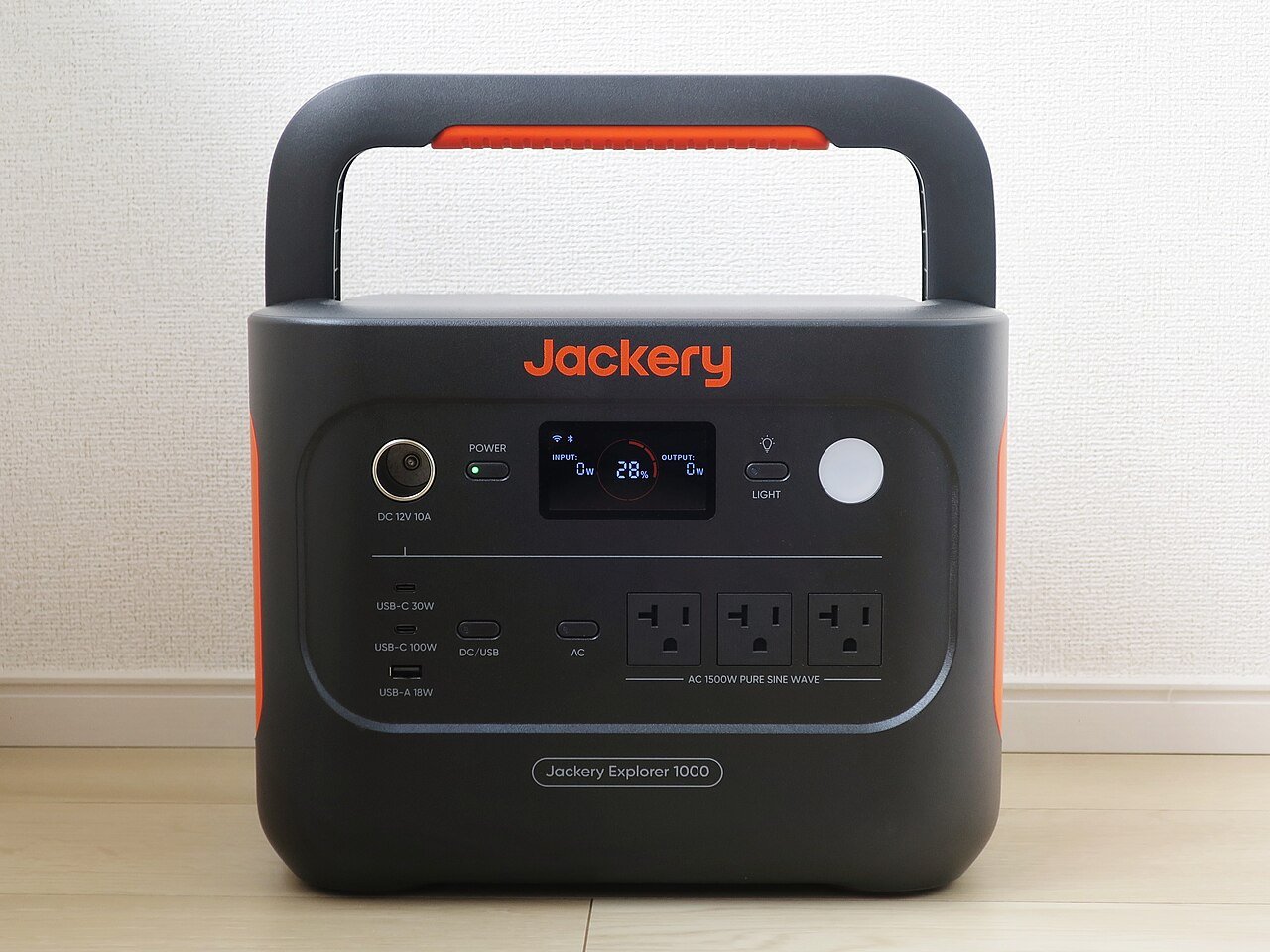
| Explorer 1000 v2 Jackery | 1,070 Wh LiFePO4 on the US spec sheet (marketed as 1,024 Wh) | 3 outlets, 1,500 W rated, 3,000 W surge peak | Under 20 ms switchover, per Jackery | AC in about 1.58 hours (emergency mode 0–100% in 50 min via the app); up to 400 W solar | About 23.8 lb | Jackery’s FAQ says its power stations are not recommended for medical, life-support or other applications where an interruption could cause injury or significant damage |
| AC180 BLUETTI | 1,152 Wh LiFePO4 (AC180P version: 1,440 Wh) | 4 outlets, 1,800 W pure sine wave, 2,700 W surge | Not stated on the product page (pass-through charging: yes) | Up to 1,440 W AC in Turbo mode (about 1.3–1.8 hours, per BLUETTI); up to 500 W solar | About 35.3 lb | Showed out of stock (restock expected late November) on November 2, 2026; BLUETTI says its runtime formula doesn’t apply to compressor loads like refrigerators |
Not a ranking. Listed in the order we discuss them. Figures are what each maker published on November 2, 2026.
EcoFlow DELTA 3 Plus: The Fastest Stated Switchover
EcoFlow lists the DELTA 3 Plus at 1,024 Wh with six AC outlets totaling 1,800 W and a 3,600 W surge, and says the DELTA 3 series supports most household devices including refrigerators. The detail that matters most for a medication fridge is its UPS rating: EcoFlow says it switches over in under 10 milliseconds, so you can leave the fridge plugged into the station and the station plugged into the wall, and the fridge keeps running when the grid drops. It recharges from the wall at up to 1,500 W (EcoFlow says 0–100% in 56 minutes), from solar at up to 1,000 W, and from a car at up to 800 W with EcoFlow's alternator charger. It can be expanded to about 5 kWh with EcoFlow's extra batteries, which is the difference between an evening and a couple of days.
Two caveats from EcoFlow itself: the product page showed “Out of Stock” on EcoFlow's US store when we checked, and its footnotes say the published figures come from internal testing under specific conditions.
Best for: households that want the fridge on automatic backup and may want to add capacity later.
Anker SOLIX C1000X: Pure Sine Wave and App Control
Anker lists the SOLIX C1000X at 1,056 Wh with six AC outlets, 1,800 W of continuous pure sine wave output and a 2,400 W surge, and a UPS switch time under 20 milliseconds. It recharges at up to 1,300 W from the wall (Anker says 0–100% in 58 minutes) and up to 600 W from solar, and can be expanded to 2,112 Wh with Anker's expansion battery. Anker's app connects over Wi-Fi and Bluetooth, which means you can check the battery level from another room or, on Wi-Fi, from away. Anker says the C1000 line is certified by SGS to UL 1012, UL 1778, UL 1973 and UL 60730.
One fine-print point: Anker's SurgePad feature lets the station run loads above its rating, but Anker says it works best with heat-generating devices and doesn't support equipment with strict voltage requirements. Treat the 2,400 W surge figure, not SurgePad, as the number that matters for a compressor.
Best for: people who want remote monitoring and a clearly stated pure sine wave inverter.
Jackery Explorer 1000 v2: The Lightest of the Four
Jackery markets the Explorer 1000 v2 as 1,024 Wh; its US spec sheet lists the battery at 1,070 Wh (30.4 Ah at 35.2 V). It has three AC outlets rated 1,500 W together with a 3,000 W surge peak, and at about 23.8 lb it's the lightest station here. Jackery says it switches power in under 20 milliseconds during outages or voltage fluctuations, which allows the same plugged-in setup as a UPS. It recharges from the wall in about 1.58 hours, or faster in an emergency charging mode set in Jackery's app (0–100% in 50 minutes, per Jackery), and from solar at up to 400 W.
Jackery's own FAQ is worth reading before you rely on it: it says Jackery power stations are not recommended for medical devices, life-support equipment or other applications where a power interruption could cause injury or significant property damage, because interruptions can happen from battery depletion, overload protection or environmental conditions. A fridge holding medication isn't a medical device, but the point applies to any of these stations: a battery is a backup with a limit, so keep the cooler plan too.
Best for: people who need to lift or move the station themselves.
BLUETTI AC180: The Most Capacity of the Four
BLUETTI lists the AC180 at 1,152 Wh (and an AC180P version at 1,440 Wh), with four AC outlets, 1,800 W of pure sine wave output and a 2,700 W surge. It recharges at up to 1,440 W from the wall in Turbo mode (BLUETTI says about 1.3–1.8 hours) and up to 500 W from solar, and it supports pass-through charging. Its product page does not state a UPS switchover time, so if automatic backup matters to you, confirm that with BLUETTI before you buy. At about 35.3 lb, it's also the heaviest here.
BLUETTI publishes one of the more honest runtime explanations we found. Its formula is battery capacity × 90% depth of discharge × 85% inverter efficiency ÷ (load + about 15 W of the station's own consumption), and it notes that the formula is not suitable for compressor loads like refrigerators, which cycle on and off. The AC180 showed out of stock on BLUETTI's US store when we checked, with a restock expected in late November.
Best for: the most watt-hours in a single unit of this size, if you don't need a stated UPS rating.
How to Estimate Runtime for Your Own Fridge
Runtime charts on product pages are built on someone else's fridge. Yours is on its yellow EnergyGuide label, which shows estimated yearly electricity use in kWh. A rough method:
- Daily use: yearly kWh ÷ 365. A fridge labeled 400 kWh a year uses about 1.1 kWh (1,100 Wh) a day, or an average of about 46 W.
- Usable battery: capacity × about 0.9 × about 0.85, using BLUETTI's published depth-of-discharge and inverter-efficiency figures as a stand-in. For a 1,024 Wh station, that's roughly 780 Wh.
- Divide: 780 Wh ÷ 46 W is about 17 hours. Add the station's own standby draw (BLUETTI quotes about 15 W for the AC180) and it drops to roughly 13 hours.
That's an estimate, not a promise. A warm kitchen, frequent door openings, a full freezer section or a defrost cycle all change it, and the label figure itself is a standardized test, not your kitchen. The practical takeaway: a 1 kWh-class station buys you somewhere between an evening and a day for a full-size fridge. For longer outages, plan to recharge it (solar, a car, or a generator running safely outdoors) or move the pens to a cooler before the battery runs out.
Setting It Up Before You Need It
- Test it on a normal day. Plug the fridge into the charged station, unplug the station from the wall, and watch the station's display for an hour. You'll see your fridge's real draw and whether the compressor starts cleanly.
- Use a heavy-duty cord if you need one. The fridge's plug should go straight into the station or into a properly rated cord; check your fridge maker's guidance on extension cords first.
- Keep it charged. Anker recommends checking capacity weekly and recharging if it drops below 30%; BLUETTI recommends storing at 40–60% and topping up every 3–6 months. If you use the UPS setup, it stays charged from the wall.
- Put a thermometer in the fridge. A min/max thermometer tells you what actually happened during the outage. Our fridge thermometer comparison covers options.
- Mind temperature limits. These stations list operating ranges (for example, Jackery: discharge 14–113°F; BLUETTI: discharge −4–104°F, with output reduced above 86°F). A hot garage in a summer outage can be outside them.
After the Outage: Checking Your Pens
FDA's guidance is direct: if a medicine wasn't kept at its recommended temperature during a power outage, check its storage instructions or contact a pharmacist, health care provider or the manufacturer to find out whether it can still be used. Ready.gov's general rule is that if power is out for more than a day, refrigerated medication should be discarded unless the label says otherwise, and you should contact your doctor or pharmacist for a new supply. GLP-1 labels say not to use a pen that has frozen, even if it thawed, which is why ice packs shouldn't touch pens in a cooler. Write down the high and low readings and how long they lasted before you call. If the outage is part of a hurricane or other declared emergency, our emergency guide covers emergency refill rules and evacuation packing.
Which One Fits You
- You want the fridge on automatic backup: EcoFlow DELTA 3 Plus (under-10 ms UPS) or Anker SOLIX C1000X (under-20 ms UPS).
- You want to check on it remotely: Anker SOLIX C1000X (Wi-Fi and Bluetooth app).
- You need to carry it: Jackery Explorer 1000 v2 (about 23.8 lb).
- You want the most watt-hours in one box: BLUETTI AC180 (1,152 Wh; AC180P 1,440 Wh), after confirming switchover behavior.
- You only need a few pens cold: skip the big station. A cooler with wrapped gel packs, or a powered medication cooler, is simpler.
Frequently Asked Questions
What is the best battery backup for a fridge that stores GLP-1 pens?
For a full-size kitchen fridge, look at a 1 kWh-class LiFePO4 portable power station with enough AC output and surge to start the compressor, and ideally an automatic switchover so the fridge stays plugged in through an outage. EcoFlow DELTA 3 Plus (1,024 Wh, 1,800 W, under-10 ms UPS), Anker SOLIX C1000X (1,056 Wh, 1,800 W pure sine wave, under-20 ms UPS), Jackery Explorer 1000 v2 (1,070 Wh on its US spec sheet, 1,500 W, under-20 ms switchover) and BLUETTI AC180 (1,152 Wh, 1,800 W pure sine wave) all fit that description on paper. These are maker specs; we did not test them with a fridge.
How long will a 1,000 Wh power station run my refrigerator?
It depends on your fridge, so do the math from its EnergyGuide label. Divide the yearly kWh by 365 to get daily use, then compare it with the usable energy in the station. BLUETTI’s published formula uses 90% depth of discharge and 85% inverter efficiency, which turns 1,024 Wh into roughly 780 Wh usable. A fridge rated 400 kWh a year averages about 1.1 kWh a day, so that station would cover something like 15 to 17 hours before counting the station’s own standby draw. Real runtime changes with room temperature, door openings and the fridge’s defrost cycle.
Can I just move my pens into a cooler instead?
Yes, and FDA suggests exactly that as part of an outage plan: have a cooler and ice or frozen gel packs available and follow the medicine’s labeled storage instructions. Don’t let pens touch ice or frozen packs directly, because GLP-1 labels say not to use a pen that has frozen. A small thermometer in the cooler tells you whether it’s staying in range.
Should I use a gas generator to run my fridge?
Only outdoors, and only following the generator maker’s instructions. Ready.gov says generators and fuel should always be used outdoors at least 20 feet from windows, doors and attached garages, with working carbon monoxide detectors on every level of the home. A battery power station has no exhaust, which is why people use them indoors, but it runs out sooner.
How long does a fridge stay cold without power?
Ready.gov says a refrigerator will keep food cold for about four hours if you keep it closed. That’s a food-safety rule of thumb, not a medication rule. For your pens, check a thermometer and your label: unused GLP-1 pens are generally labeled for 36–46°F (2–8°C), with limited room-temperature allowances that differ by product.
My power was out and I’m not sure my pens stayed cold. Can I use them?
Don’t guess. FDA says that if a medicine wasn’t kept at its recommended temperature during an outage, check its storage instructions or contact a pharmacist, health care provider or the manufacturer to find out if it can still be used. Ready.gov’s general rule is that if power is out for more than a day, refrigerated medication should be discarded unless the label says otherwise. Note the highest and lowest readings and how long they lasted, then call before your next dose.
Sources
- EcoFlow — DELTA 3 Plus portable power station
- Anker — SOLIX C1000X portable power station
- Jackery — Explorer 1000 v2 portable power station (specs and FAQ)
- BLUETTI — AC180 portable power station (specs and runtime FAQ)
- Ready.gov — Power Outages (medicines, food, generator safety)
- FDA — Safe Drug Use After a Natural Disaster
- FDA — Ozempic prescribing information
- FDA — Wegovy prescribing information
- Lilly — Zepbound single-dose pen Instructions for Use