GLP-1 Pills: Storage, Travel and Pharmacy Pickup for Wegovy Tablets, Foundayo, Rybelsus and Ozempic Tablets
Almost everything written about GLP-1 storage assumes a pen: refrigerators, ice packs, insulated cases, cold-chain deliveries. A growing number of people now get a GLP-1 as a once-daily tablet instead, and the tablets come with nearly the opposite set of instructions. This guide covers what the FDA labels say about storing GLP-1 pills, the habits from pen life that don’t carry over, what to check at the pharmacy counter, and how to pack tablets for travel. Anything about your dose, timing or whether a tablet is right for you is a question for your prescriber.
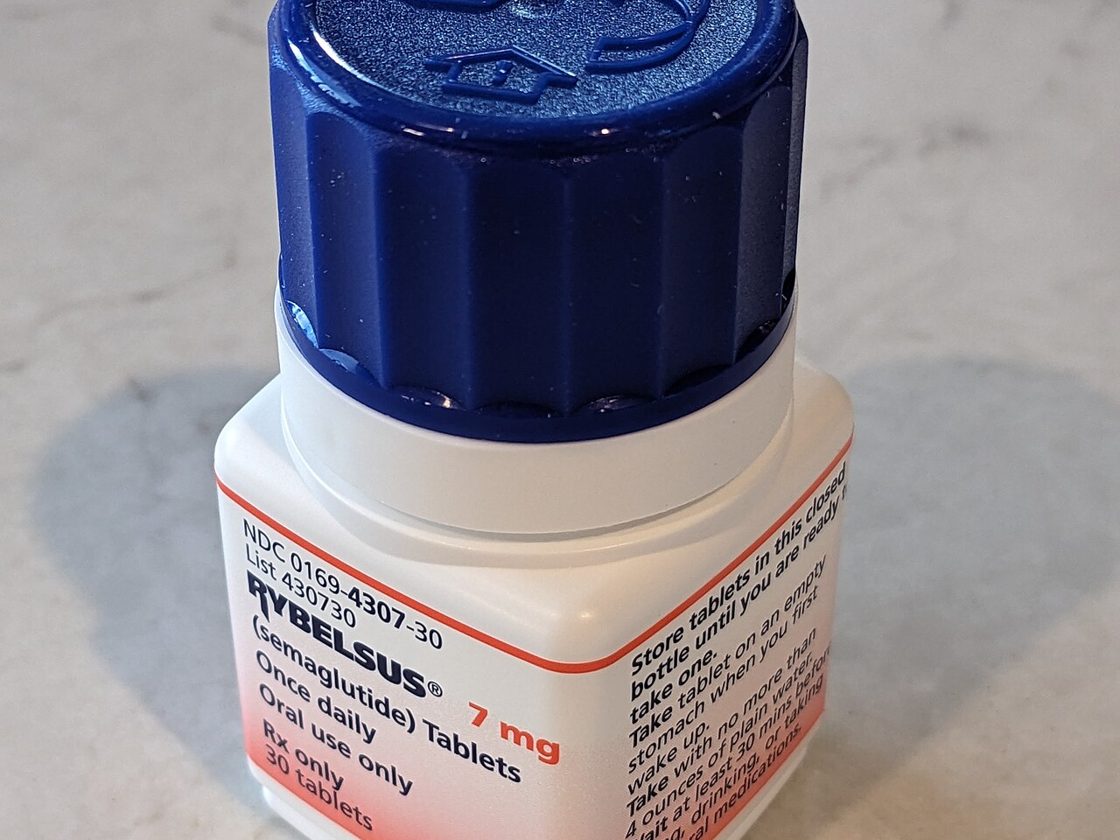
- ✓No refrigerator and no ice packs: every oral GLP-1 label says room temperature, 68–77°F, with short excursions allowed from 59°F to 86°F.
- ✓Semaglutide tablets stay in the original bottle until the moment you take one. The Medication Guide for Rybelsus and Ozempic tablets says not to store them in any other container.
- ✓Moisture is the enemy for semaglutide tablets. Skip the bathroom cabinet and keep the cap closed.
- ✓Foundayo bottles come with a desiccant and a child-resistant closure; follow the bottle and ask your pharmacist before repackaging.
- ✓At pickup, check the product name and strength against your prescription. Ozempic tablets are a newer formulation that is not interchangeable mg-for-mg with older semaglutide tablets.
- ✓For flights, keep the labeled bottle in your carry-on. TSA screens pills and says clear labeling helps.
Which GLP-1 Medicines Come as Pills?
Until recently the answer was one product. Now there are several, and they are easy to mix up because two of them share names with injectable pens:
- Wegovy tablets (semaglutide). The Wegovy prescribing information now covers both the weekly injection and a once-daily tablet. The tablets are supplied in bottles of 30.
- Foundayo (orforglipron), Eli Lilly's once-daily tablet, approved by the FDA in 2026. Its label says the tablets come in bottles of 30 with a desiccant and a child-resistant closure.
- Rybelsus (semaglutide), the original oral semaglutide for type 2 diabetes, now supplied in bottles of 30.
- Ozempic tablets (semaglutide). The current DailyMed listing covers Rybelsus and a newer semaglutide tablet formulation sold under the Ozempic name. Ozempic the pen and Ozempic tablets are different products with different storage rules.
Which one you take, and at what strength, is your prescriber's call. This guide is about what happens after the prescription is written: where the bottle lives, how it travels and what to check when you pick it up. If you are also comparing coverage, our Medicare GLP-1 guide explains which tablets are on the bridge program list.
What the Labels Say About Storing GLP-1 Pills
The prescribing information is the rulebook, and on storage the tablets agree with each other far more than the pens do.
Temperature: room temperature, with a narrow cushion
All four labels give the same range: store at 20–25°C (68–77°F), with excursions permitted between 15°C and 30°C (59°F and 86°F). In plain terms, a normal heated and air-conditioned home is fine. A brief trip through a cool garage or a warm afternoon is covered by the excursion range. A car parked in July sun, a mailbox in August or a windowsill in direct sun is not.
The original bottle: a storage instruction, not a suggestion
For the semaglutide tablets this is the line that changes daily habits. The Wegovy label says to store and dispense the tablets in the original bottle and keep them there until use to protect them from moisture. The label covering Rybelsus and Ozempic tablets says the same, and its Medication Guide puts it bluntly for patients: store tablets in the original closed bottle until you are ready to take one, and do not store them in any other container. The FDA's chemistry review for the Wegovy tablet application describes the bottles as high-density polyethylene with a desiccant built into the cap, which is the moisture protection a pill organizer can't copy.
Foundayo's patient Medication Guide gives only the temperature range, but the prescribing information says the tablets ship in bottles with a desiccant and a child-resistant closure. If you are thinking about moving Foundayo tablets into anything else, ask your pharmacist first rather than assuming the semaglutide rules don't apply.
Dry, not damp
The semaglutide labels also say to store the tablets in a dry place away from moisture. That one instruction rules out the most common place people keep daily pills: the bathroom medicine cabinet. A bedroom drawer, a closet shelf or a kitchen cabinet that isn't over the stove, the sink or the dishwasher fits the label better.
Pen Habits That Don't Carry Over
If you switched from an injectable, or someone in your household uses a pen, it is easy to treat the tablets the same way. A few of those habits work against the tablet labels.
- Refrigerating them. The fridge is outside the labeled range, and condensation forms when you take a cold bottle into a warm room. Nothing on the tablet labels calls for cold storage.
- Packing them with ice packs. The same problem in a travel bag. A cooling case built for pens can push tablets below 59°F and adds moisture.
- Moving them to a pill organizer. Fine for many medicines, but not for semaglutide tablets, whose labels say to keep them in the original bottle until use.
- Keeping them next to the pens. If a household has both, keep the tablet bottle out of the fridge and somewhere separate enough that nobody grabs the wrong product.
One pen habit is worth keeping: knowing where your medicine is and what temperature it has been sitting at. Our storage guide covers the injectable side of the household.
Traveling with a pill bottle and other daily medicines? A zippered medication pouch keeps original bottles together in your carry-on without repackaging anything.
See Travel & Organization Gear →At the Pharmacy Counter
Tablets skip the cold-chain checks that pen pickups need, but they bring their own. Look at the bottle before you leave the counter.
- Check the product name. “Wegovy” and “Ozempic” can now mean a pen or a tablet. Make sure what you received matches what your prescriber wrote.
- Check the strength on the bottle against the prescription. Tablet strengths differ between products. The carton for Ozempic tablets carries a note to pharmacists that individual semaglutide strengths are not substitutable on a mg-to-mg basis, because it is a new formulation. If the number on the bottle surprises you, ask before you take one.
- Confirm it's sealed and labeled. The bottle should come with the manufacturer's label and the pharmacy label, plus the Medication Guide. Our guide to spotting counterfeit GLP-1 products explains why buying only from a licensed pharmacy matters for tablets too.
- Ask about mail-order heat. Tablets don't ship with ice packs, so a box left on a hot porch or in a sunny mailbox can exceed 86°F. Ask how your pharmacy handles summer deliveries and what to do if a package sat out.
Pickup on a hot day? Go straight home rather than leaving the bag in the car while you run errands. Our pharmacy pickup guide covers the counter conversation in more detail, including insurance questions.
Traveling With GLP-1 Tablets
Flights
TSA says medication in pill or other solid form must go through security screening and that clearly labeling it makes screening easier. Keeping the tablets in their original pharmacy-labeled bottle does both jobs: it follows the storage instruction and it labels the medicine. Pack the bottle in your carry-on, not your checked bag, so a delayed suitcase doesn't leave you without it and the bottle doesn't sit in a cold cargo hold or a hot baggage cart. Our GLP-1 travel guide has the full airport routine for people who carry pens as well.
International trips
The CDC's advice for traveling abroad with medicine lines up neatly with the tablet labels: keep medicines in their original, labeled containers, pack them in your carry-on, bring enough for the whole trip plus extra in case of delays, and carry copies of your prescriptions with the generic names. Rules for bringing prescription medicine into other countries vary, so check with the embassy of your destination. Our international travel guide covers customs and documentation.
Road trips and hotels
The car is the biggest risk for tablets, and it runs the other way from pens: heat, not freezing. A parked car in summer quickly climbs past the 86°F excursion limit. Bring the bottle in with you at every stop, and don't leave it in the glovebox, console or trunk. Our road trip guide explains how fast parked cars heat up. In a hotel, the minibar and room fridge are not needed. A drawer away from the bathroom works, and so does your carry-on bag.
Time zones and morning routines
The semaglutide tablets come with specific instructions in the Medication Guide about how to take them in the morning, including what to take them with and how long to wait before eating or drinking anything else. Foundayo's label says it can be taken with or without food. Travel scrambles mornings: early flights, hotel breakfasts, coffee before you are awake. If you aren't sure how to fit your label's instructions into a travel day or a big time-zone change, ask your pharmacist or prescriber before you leave rather than improvising at the gate.
If Something Goes Wrong
- The bottle got wet, or was left open in a humid room. Don't try to dry the tablets. Call your pharmacist and describe what happened.
- The tablets look different. Cracked, crumbling, sticky or discolored tablets are a pharmacist question. Don't take one to see what happens.
- A bottle sat in heat. Note roughly how long and how hot, and call the pharmacy that filled it. They can tell you whether to replace it and how your plan handles that.
- You ran out while away. Our vacation supply guide covers early refills, and a prescription transfer can move a refill to a pharmacy near you.
- You have tablets you won't use. Use a drug take-back site or the FDA's home disposal steps; our disposal guide walks through both.
Questions to Ask Your Pharmacist or Prescriber
- “Is this the tablet or the injection, and is this the strength my prescriber intended?”
- “Is there any reason I can't keep this bottle in my bag for a few days of travel?”
- “What should I do if the bottle sits in a hot car or on a hot porch?”
- “How should I fit the label's morning instructions around an early flight or a big time-zone change?”
- “If I'm switching from a pen to a tablet, what should I do with the pens I have left?”
Keep these with your medication list and emergency info card, and add the tablet's exact name and strength so a pharmacist anywhere can identify it.
This guide covers storage and logistics only. It is not medical advice and does not cover dosing, effectiveness or whether a GLP-1 tablet is right for you. Follow the prescribing information and Medication Guide for your product, and talk to your pharmacist or prescriber about any tablet that may have been exposed to heat or moisture and about any change to how or when you take it.
Frequently Asked Questions
Do GLP-1 pills need to be refrigerated?
No. The FDA-approved labels for Wegovy tablets, Foundayo, Rybelsus and Ozempic tablets all say to store the tablets at room temperature, 68–77°F (20–25°C), with short excursions allowed between 59°F and 86°F. That is the opposite of the injectable pens, which are kept in the refrigerator before first use.
Can I put my GLP-1 tablets in a weekly pill organizer?
Not the semaglutide tablets. The labels for Wegovy tablets, Rybelsus and Ozempic tablets say to keep the tablets in the original bottle until you are ready to take one, to protect them from moisture, and the Medication Guide for Rybelsus and Ozempic tablets adds: do not store in any other container. Foundayo’s label gives a room-temperature range and says its bottles come with a desiccant; ask your pharmacist before moving any tablet out of its bottle.
Is the bathroom cabinet a bad place to keep GLP-1 pills?
It is a poor choice for the semaglutide tablets, whose labels say to store them in a dry place away from moisture. Showers make bathrooms the most humid room in most homes. A bedroom drawer or kitchen cabinet away from the stove, sink and dishwasher is usually a better fit for the label’s instructions.
Can I fly with GLP-1 tablets?
Yes. TSA says medication in pill or other solid form must go through screening and that clear labeling helps. Keeping the tablets in their original pharmacy-labeled bottle in your carry-on solves both the labeling question and the label’s moisture instruction. For international trips, the CDC recommends keeping medicines in their original labeled containers and carrying copies of your prescriptions.
What if my tablets were left in a hot car?
The labels allow brief excursions only up to 86°F (30°C), and a closed car in summer can get far hotter than that. Do not guess. Call your pharmacist, tell them roughly how long and how hot, and ask whether the tablets should be replaced. Do not take a tablet that looks damaged, crumbled or discolored.
Do I still need a sharps container on a GLP-1 pill?
Not for the tablets themselves. There are no needles to dispose of. Unused or expired tablets should go to a drug take-back site or follow FDA disposal guidance, which our unused medication disposal guide covers.
Sources
- DailyMed — Wegovy (semaglutide) injection and tablets prescribing information, section 16 How Supplied/Storage and Handling
- FDA — Wegovy label (March 2026), tablets storage and Medication Guide
- FDA — Wegovy tablets chemistry review (HDPE bottles with desiccant, storage conditions)
- DailyMed — Foundayo (orforglipron) prescribing information and Medication Guide
- FDA — FDA approves Foundayo (orforglipron)
- DailyMed — Rybelsus and Ozempic (oral semaglutide) tablets prescribing information and Medication Guide
- TSA — Disabilities and Medical Conditions (medications in pill or solid form)
- CDC — Traveling Abroad with Medicine